
Standing Desk vs. Ergonomic Chair: Which Is Right for Your Body, Your Space, and Your Life
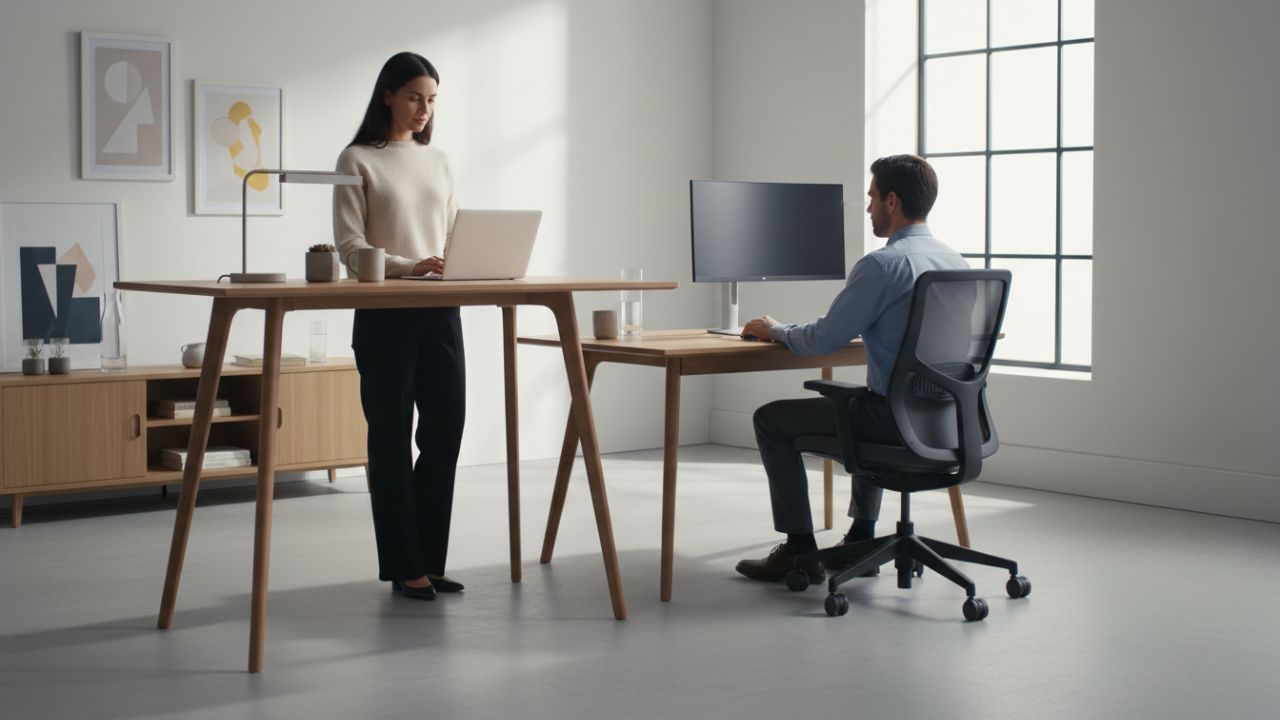
In a world obsessed with gadgets, the real decision is not which device is trending, but how you design a workspace that respects your body and your life.
After 50 years in the office furniture industry and a life lived with the philosophy of Ergonomics of Life, I have learned that balance is not about choosing one solution over another; it is about creating a complementary system that fits how you work, where you work, and how you want to live.
The Case for the Chair
A good ergonomic chair is the foundation for proper posture, spinal health, and sustained focus.
Essential chair features to look for: adjustable lumbar support, seat depth, armrests, recline range (ideally 110–130 degrees for back relief), and breathable materials.
How the chair interacts with your work patterns: desk tasks that require precision and long seated periods benefit from dynamic sitting and lumbar support.
Smart Seating by We Love Furniture (link to the catalogue on the website)
The Case for the Standing Desk
Height-adjustable desks empower movement, reduce the risks of prolonged sitting, and support a broader range of tasks.
Benefits: variety of postures, reduced disc pressure over the day, improved circulation, and energy for task-switching.
How to use standing not as a default mode but as a purposeful tool: switch to standing for certain tasks (e.g., brainstorming, drafting, calls) and alternate with sitting.
The value of manual vs. electric height adjustment: manual height adjustment for simplicity and reliability; electric height adjustment for speed and memory presets in multi-user environments.
Agile Height by We Love Furniture (link to catalogue on the website)
The Ergonomic Life Approach (Integrating Chair + Desk)
The most effective workspace is a system, not a single product.
The chair and desk should be selected in tandem, matching your body metrics, tasks, and work rhythms.
Movement is essential: encourage posture variation, micro-movements, and scheduled breaks.
For hybrid or multi-location teams (home, office), provide a consistent ergonomic standard across environments.
Practical Guidelines
Assess your tasks: what proportion is desk-based vs. stand-focused?
Choose a chair with adjustable lumbar support and a reclining backrest; pair with a height-adjustable desk for a dynamic setup.
Introduce simple routines: 5–10 minutes of movement every hour, chair adjustments every time you switch tasks.
Real-World Scenarios
Home/Hybrid Workers: A comfortable chair + height-adjustable desk creates a reliable productivity foundation at home.
Corporate / Open Plan: A consistent ergonomic set that scales across the floor plan supports 8+ hour days and hybrid schedules.
Conclusion
The right choice is not a single piece, but a thoughtfully designed system that supports you wherever you work and whatever you do. If you would like to discuss how to tailor a standing desk + ergonomic chair plan for your team or space, I am here to help.
Please reach out in the link provided and I would like the opportunity to explore options to help you