How Sitting for Long Periods Affects Disc Pressure and How to Alleviate

The modern workplace has created an unexpected health challenge: sitting has become the new smoking. For professionals spending eight or more hours at a desk, understanding how sitting affects spinal health is not just academic, it is essential for long-term wellbeing.
The human spine undergoes significant stress during prolonged sitting, with disc pressure increasing dramatically based on posture and positioning.
Understanding Disc Pressure and Spinal Health
The spine consists of vertebrae separated by intervertebral discs that act as shock absorbers. These discs contain a gel-like centre surrounded by tough outer rings, designed to distribute pressure evenly throughout the spine. When functioning optimally, these discs maintain proper spacing between vertebrae and facilitate smooth movement.
However, the human body was not engineered for extended sitting. Our ancestors spent most of their time standing, walking, or lying down, not perched in chairs for hours on end. This evolutionary mismatch creates measurable stress on spinal structures, particularly the lower back discs.

The Sitting Paradox: Why Sitting Increases Disc Pressure
Many people assume sitting reduces spinal pressure compared to standing, but research reveals a different reality. When transitioning from standing to sitting, the pelvis rotates backward, causing the lower spine to lose its natural curve. This biomechanical shift forces the intervertebral discs to bear weight unevenly, concentrating pressure on the front portions of the discs.
Standing posture serves as the baseline measurement, representing 100%-disc pressure. Surprisingly, even lying down does not eliminate all pressure, it maintains approximately 25% of standing pressure. The real concern emerges when examining various sitting positions and their impact on disc compression.
How Different Sitting Postures Affect Your Spine
Research has quantified the relationship between sitting angles and disc pressure, revealing dramatic differences based on posture:
| Posture | Disc Pressure |
| Lying down | +25% |
| Standing | 100% (baseline) |
| Sitting reclined at 110° | +105% |
| Sitting upright at 100° | +115% |
| Sitting at 90° | +140% |
| Sitting hunched at 80° | +190% |
These measurements demonstrate that poor sitting posture can nearly double the pressure on spinal discs compared to standing. The hunched forward position at 80 degrees, common when leaning toward a computer screen or desk, creates the most damaging scenario, with disc pressure approaching twice that of standing.
The Forward Lean Problem
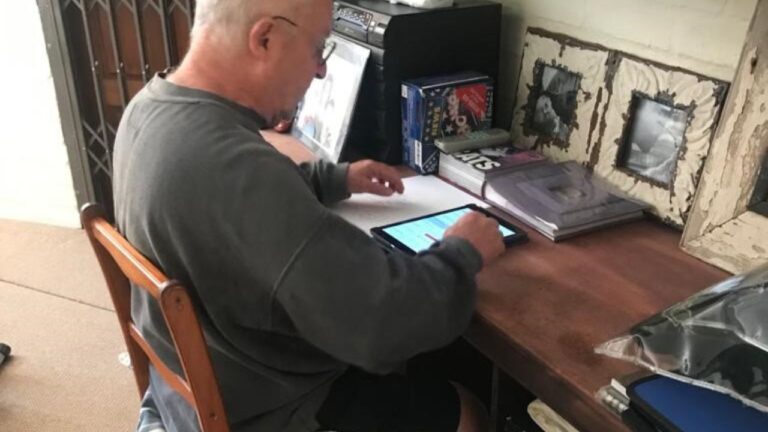
Office workers frequently adopt a forward-leaning posture, especially during tasks requiring precision like typing, writing, or reading detailed documents.
This position seems natural in the moment but compounds pressure on the anterior portion of the discs. Over time, sustained forward lean can contribute to disc degeneration, herniation, and chronic lower back pain.
The Role of Ergonomic Chairs in Reducing Disc Pressure
Quality ergonomic chairs address the fundamental biomechanical problems that create excessive disc pressure. Unlike standard office chairs, ergonomic designs support the spine’s natural curvature and distribute pressure more evenly across the sitting surface.

Key Ergonomic Features That Protect Your Spine
Adjustable Lumbar Support
The lumbar region of the spine naturally curves inward. Ergonomic chairs provide adjustable lower back support that maintains this curve even while sitting. This support prevents the backward pelvic rotation that increases disc pressure, keeping the spine in a more neutral, healthy position.
Recline Functionality
The ability to recline the backrest creates significant pressure relief. Research indicates that reclining to 100-110 degrees reduces disc pressure compared to upright sitting. This feature allows users to shift positions throughout the day, alternating between upright focus and reclined relaxation.
Seat Depth and Tilt Adjustments
Proper seat depth ensures adequate thigh support without compressing the back of the knees. Many ergonomic chairs offer seat tilt options, allowing the seat pan to angle slightly forward or backward. A slight backward tilt can help maintain contact with the lumbar support and reduce forward slumping.
Armrest Support
Adjustable armrests reduce the tendency to lean forward by supporting the forearms during typing and mouse work. When properly positioned, armrests take weight off the spine and shoulders, reducing overall postural strain.
Practical Strategies for Reducing Disc Pressure
Investing in an ergonomic chair provides the foundation, but optimal spinal health requires active participation and awareness throughout the workday.
Optimal Chair Setup for Minimum Disc Pressure
Proper chair configuration makes a substantial difference in spinal loading:
- Position feet flat on the floor or on a footrest to maintain stable hip alignment
- Ensure 2-3 fingers of space between the seat edge and the back of the knees
- Keep shoulders relaxed with elbows positioned at approximately 90-110 degrees
- Adjust the monitor so the top of the screen sits at or just below eye level
- Recline the backrest to 100-110 degrees and maintain consistent lower back contact with the lumbar support
Dynamic Sitting Techniques
Static posture, even good posture, creates sustained pressure on the same spinal structures. Dynamic sitting involves subtle position changes that redistribute pressure throughout the day:
- Adjust backrest angle based on task requirements: recline for reading or phone calls, sit more upright for precision work
- Use seat tilt adjustments to shift weight distribution periodically
- Engage a footrest to facilitate gentle leg movement and position changes
- Rock gently in the chair when appropriate to activate core muscles and promote circulation
The Sit-Stand Solution
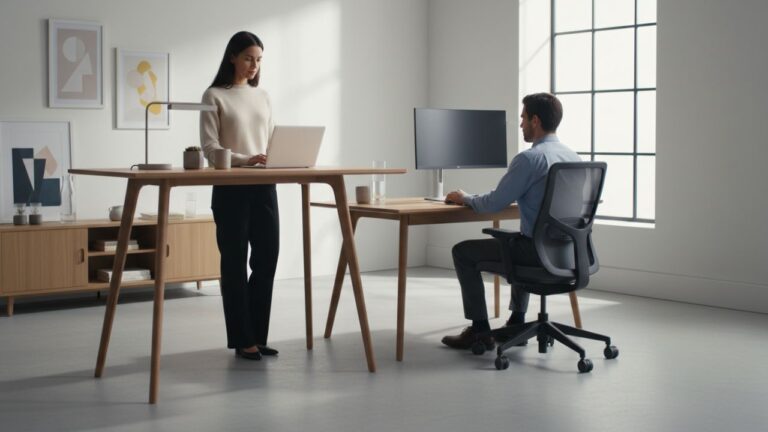
Alternating between sitting and standing every 30-60 minutes provides significant relief. Standing maintains approximately the same disc pressure as baseline, offering a break from the elevated pressure of sitting. Sit-stand desks have gained popularity precisely because this alternation addresses the fundamental problem of sustained sitting posture.
Movement Breaks and Micro-Exercises
Brief movement breaks serve multiple purposes: reducing disc pressure, preventing muscle stiffness, and improving circulation. Consider incorporating these strategies:
- Stand and walk for 2-3 minutes every 30-60 minutes
- Perform gentle spinal extensions by standing and arching backward slightly
- Execute seated spinal rotations to mobilize the thoracic spine
- Practice shoulder blade squeezes to counteract forward shoulder posture
- Stretch hip flexors, which tighten during prolonged sitting
Task-Specific Posture Adjustments
Different work activities create different postural demands. Adapting chair position to match the task reduces unnecessary disc pressure:
- Recline during phone calls, meetings, or reading to minimize pressure
- Return to a more upright position for typing or detailed computer work
- Maintain armrest and lumbar support contact during all forward-reaching tasks
- Position frequently used items within easy reach to prevent repetitive twisting or leaning
Long-Term Implications and Prevention
Chronic excessive disc pressure does not create immediate pain in most cases, but cumulative damage develops over months and years. Disc degeneration, bulging discs, herniation, and chronic lower back pain often trace their origins to years of poor sitting habits and inadequate spinal support.
Prevention proves far easier than treatment. Individuals who invest in proper ergonomic support and maintain awareness of their sitting posture significantly reduce their risk of developing chronic spinal problems. The spine’s remarkable capacity for healing and adaptation means that positive changes can yield benefits even after years of poor posture, but earlier intervention produces better outcomes.
Conclusion: Sitting Smarter for Spinal Health
The evidence clearly demonstrates that sitting posture profoundly affects spinal disc pressure, with poor posture nearly doubling the mechanical stress on these critical structures. However, this knowledge empowers rather than discourages. By understanding the biomechanics of sitting, investing in quality ergonomic chairs, and implementing active postural strategies, professionals can protect their spinal health without sacrificing productivity.
The solution is not abandoning sitting entirely, modern work often requires it. Instead, sitting smarter through proper ergonomic support, regular position changes, and periodic movement breaks creates a sustainable approach to desk work. Every degree of recline, every moment of lumbar support contact, and every standing break contributes to long-term spinal health. The spine you protect today will support you for decades to come.
Data shown in this document adapted from Nachemson (1966) and Nachemson & Elfström (1970) corroborated by Wilke et al (1999). Figures are approximate and for educational use only.